UX/UI Design for a Commercial Shipping Application

One web platform for rates, labels, tracking, and invoicing, for everyone from first-time shippers to high-volume teams.
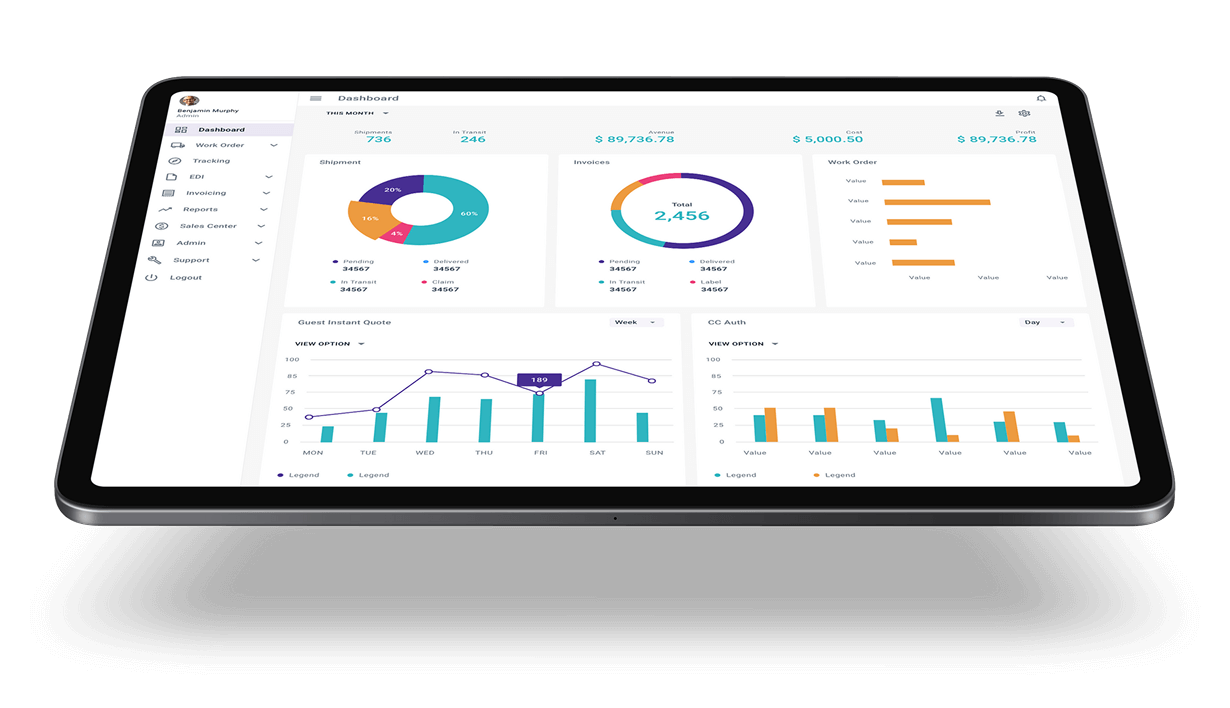
Businesses that ship every day lose time to the same routine: comparing carrier rates, printing labels, tracking parcels, chasing invoices, usually across separate tools. We designed a web shipping platform for a Canadian logistics provider that puts the whole cycle in one interface, from rate selection to billing. New users get productive with little training, experienced staff work at full speed, and the platform launched ready for both English and French.

Challenges

Creating a commercial shipping solution required balancing several key needs. Users had to easily compare and select from multiple carriers based on price, speed, and delivery preferences. The interface had to work for people with widely varying technical skills, from busy office managers to first-time shippers. Order management workflows needed to minimize errors while remaining flexible enough to handle changing shipping requirements.

Our Approach
User Research & Competitive Analysis

We interviewed key stakeholders across shipping operations and customer service teams to understand their daily challenges. We also conducted a detailed review of competing logistics platforms, benchmarking features, usability, and design patterns. This research allowed us to identify gaps in the market and prioritize solutions that would improve usability, reduce training time, and increase operational efficiency.

Role-Specific Workflows and Permissions

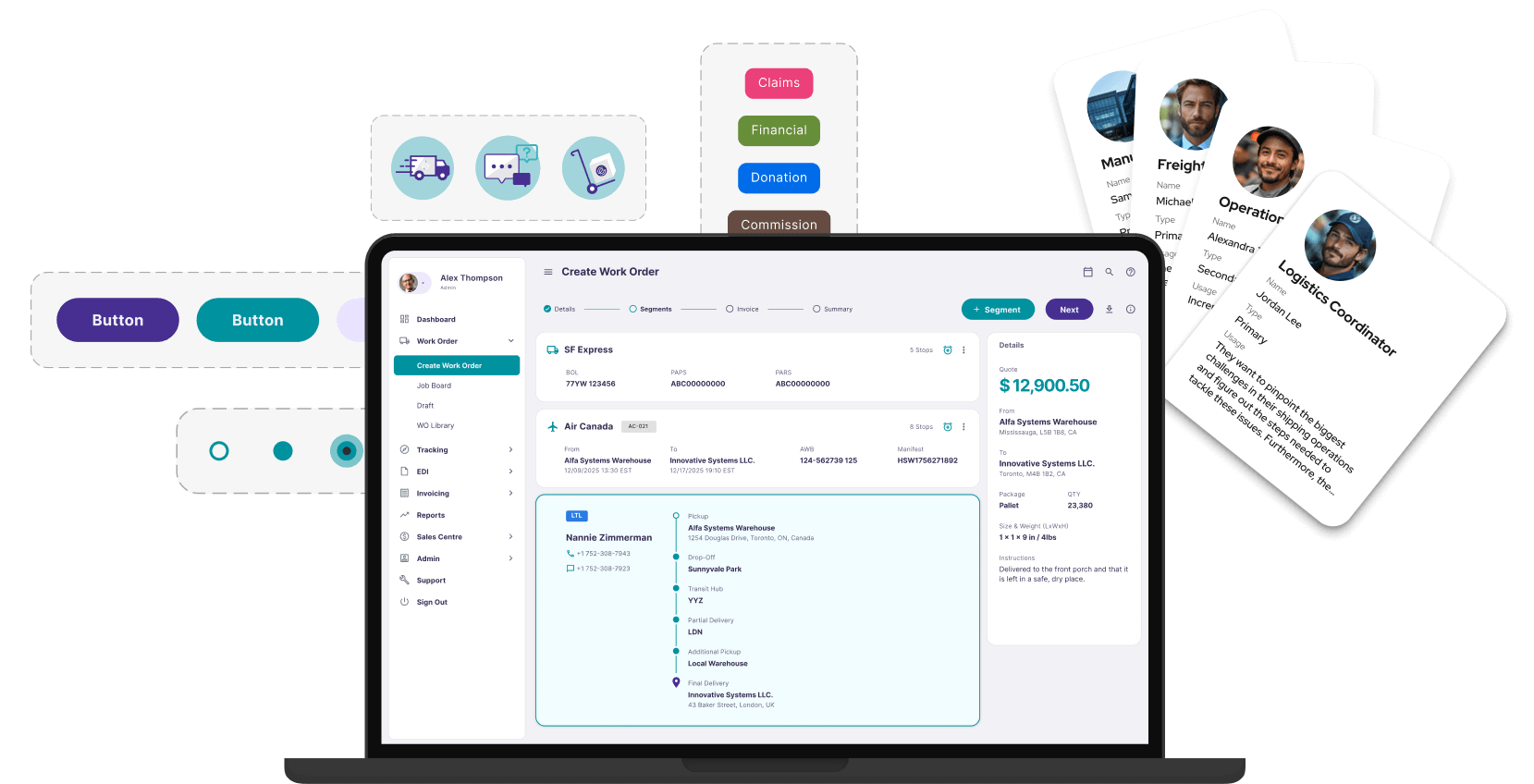
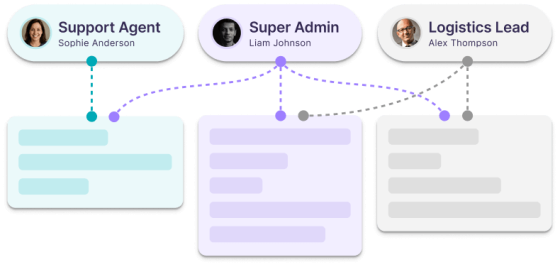
We mapped the daily work of warehouse staff, office managers, and customer service agents, and defined what each role needed to see and what it didn't.

Success Metrics Definition

We established clear performance targets early in the project, focusing on measurable outcomes such as reducing order entry time, lowering shipment creation errors, and improving customer support response efficiency. These benchmarks ensured every design decision supported tangible business results while enhancing the overall user experience.

User Journey Planning

We mapped out the step-by-step journeys for core shipping tasks. Each stage, from rate selection to label generation and tracking, was designed with logical navigation and clear visual cues. The design prioritized intuitive controls, streamlined decision-making, and consistent interaction patterns, which reduced cognitive load for users who rely on the platform for high-volume shipping.

Design System Development

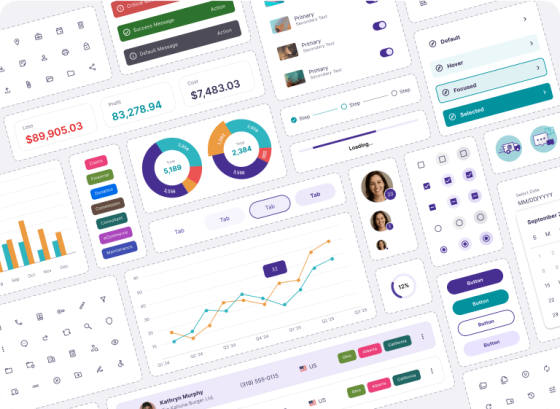
We set the foundations early: typography, components, and interaction rules aligned with the client's brand and front-end framework, so design and development could move in parallel.

Solution

The platform treats shipping as one continuous flow rather than a set of separate tools. Users move from comparing rates to printing labels to reconciling invoices without changing context, and the interface keeps every step consistent along the way.
Unified Platform Architecture

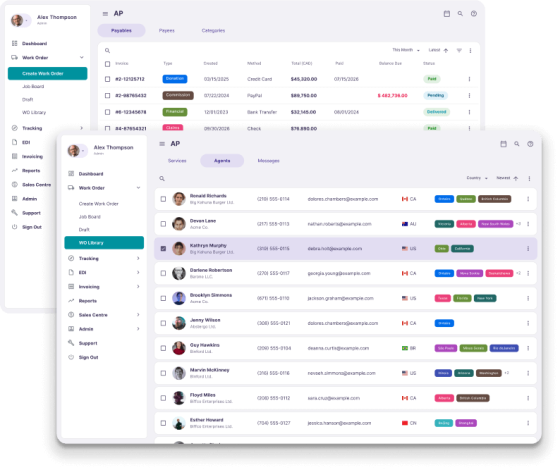
We established a consistent visual and interaction framework across every part of the platform, from rate comparison to invoicing. This ensured users experienced the same navigation logic, controls, and visual patterns no matter which module they were using, reducing cognitive load and improving task efficiency.

Role-Based Workflow Design

User journeys were tailored to specific roles such as warehouse staff, office managers, and customer service agents. Each role saw only the tools and data relevant to their tasks, helping new users onboard quickly and enabling experienced users to work without distractions.

Scalable Design System

We developed a custom design system aligned with the client’s brand and built for their front-end framework. This system supports future feature development, ensuring that new modules can be added without disrupting the UI logic and keeping the experience intuitive for users.

Optimized Shipping Management Interface

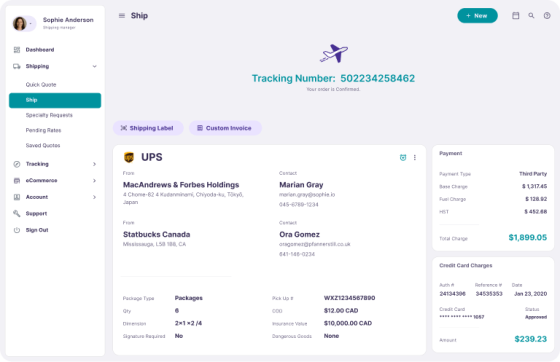
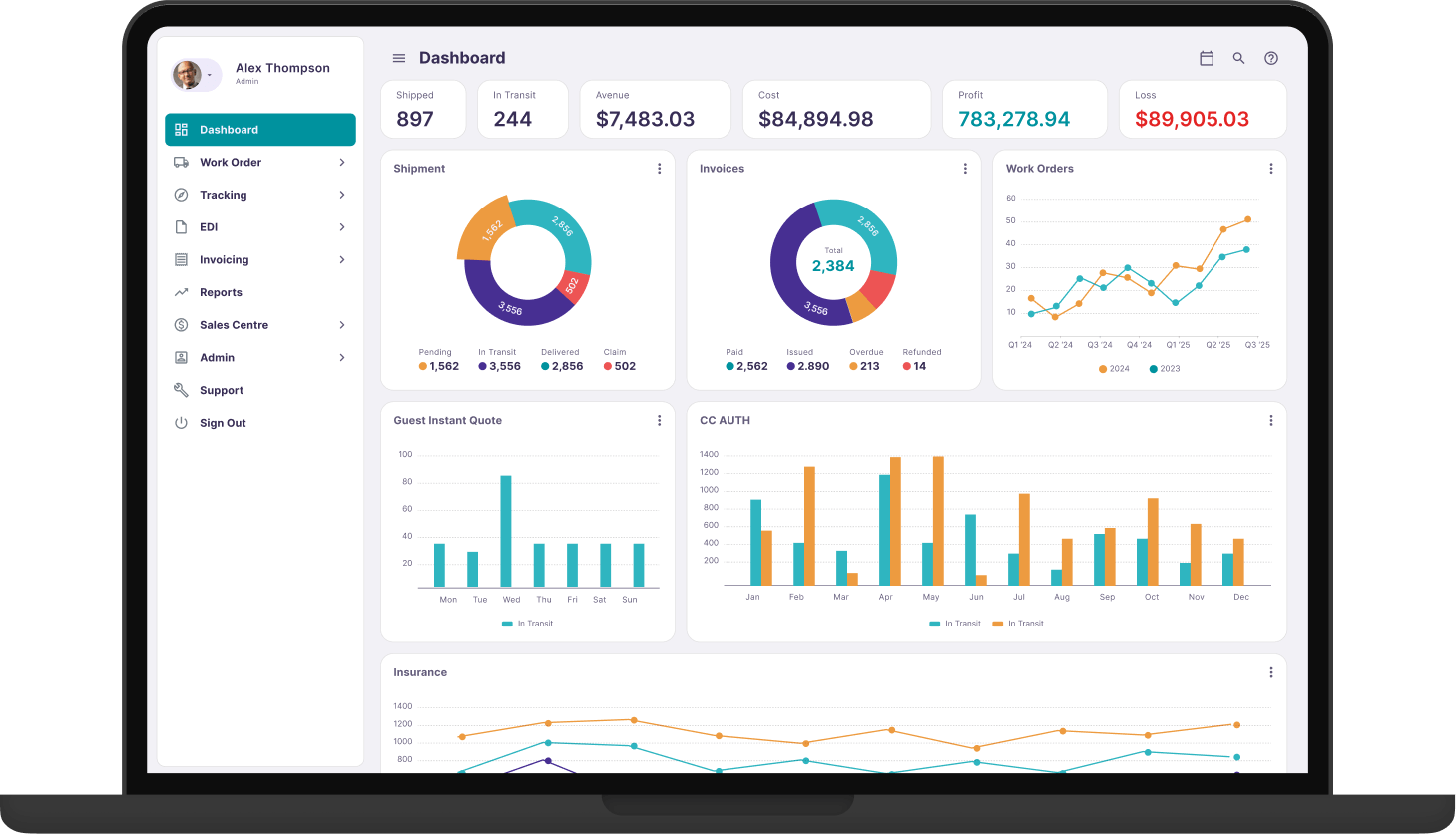
All shipping tasks are available in one streamlined dashboard. Users can create shipments, track orders, generate labels, and manage billing without switching between screens. This reduces effort and keeps the entire order lifecycle visible at a glance.

Accessibility and Multi-Language Readiness

The platform was designed to meet AODA and WCAG standards, ensuring inclusivity for all users. Its architecture also supports multi-language capabilities, enabling the product to expand to new markets without major redesigns.

Results

Complex multi-role platforms are where we do our best work. See what that looks like in enterprise SaaS product design.
Unified Shipping Platform

A complete solution integrating all core shipping tasks into a single interface.

Scalability and Maintainability

Built to support new features, carrier integrations, and business growth.

Multi-Language Support

Designed to accommodate English and French from launch.

Accessibility Compliance

Meets AODA and WCAG 2.1 standards for inclusive access.

Ease of Use

Reduces training time and support requests through intuitive workflows.

Let’s work together

Looking for a Streamlined, User-Centered App? Contact us today to create a custom application that delivers the information your users need—efficiently and intuitively.

    Your privacy is important to us. We will only use your information to respond to your inquiry. We will never sell or share your data with anyone.

    Schedule a Meeting